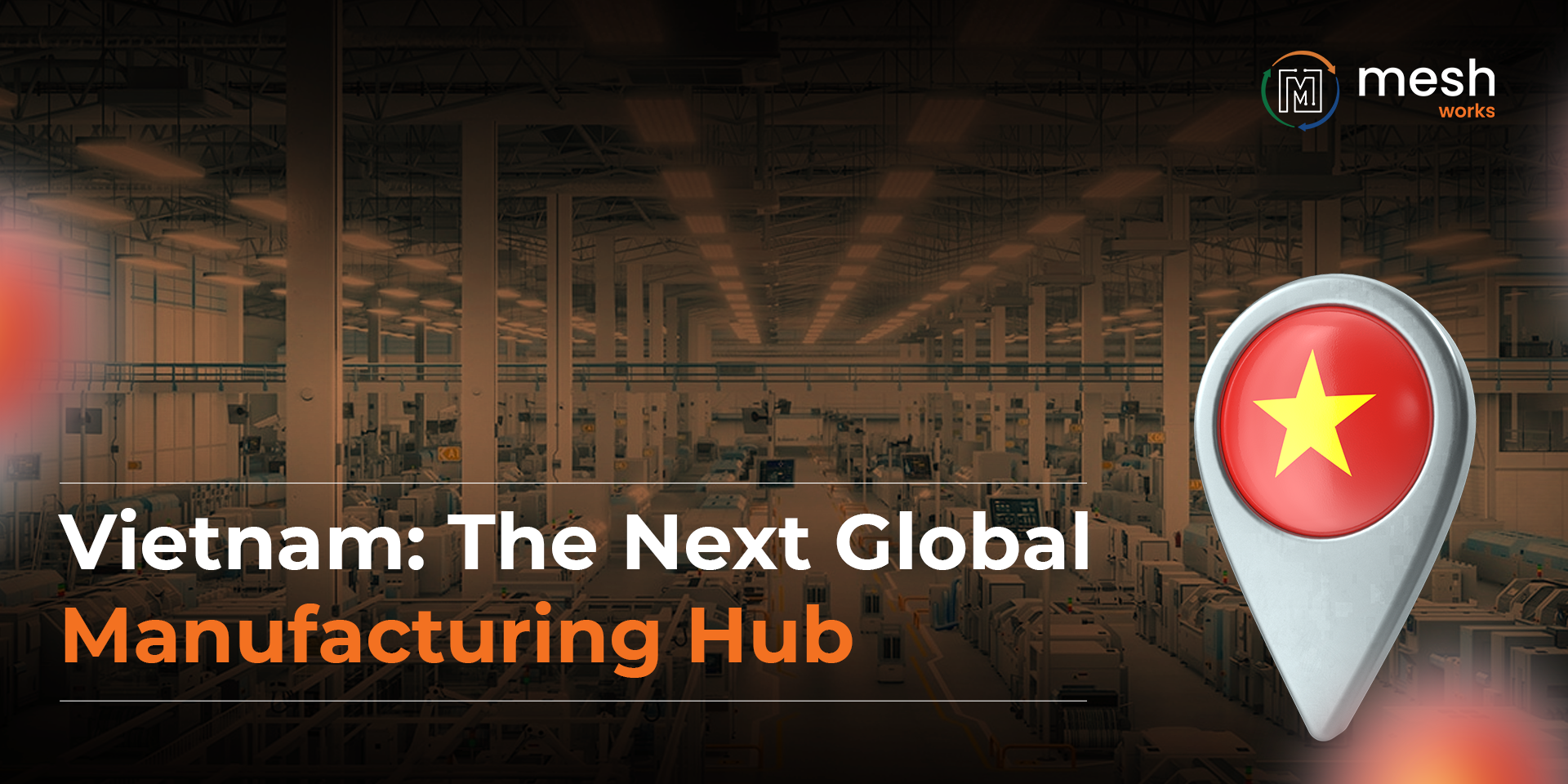
With the rise of China+1 strategies, Vietnam has emerged as a strong global manufacturing hub, drawing investments from large multinational corporations and reshaping global supply chains. With its strategic location, cost advantages, government policies & investments, Vietnam is positioning itself as a key player in the worlds industrial landscape.
Foreign Direct Investment
Last year, the manufacturing sector attracted over $23 billion in FDI, representing approximately 65% of the country’s total FDI
Major global corporations like Samsung, Foxconn, Nike & more have established operations in Vietnam
Strategic Location & Infrastructure
Vietnam’s strategic position in Southeast Asia makes it an ideal location for regional manufacturing diversification from China
Recent significant investments in infrastructure like airports, seaports, and rail networks have enhanced the connectivity inside the country
Government has supported the establishment of over 400 industrial parks and economic zones across the country
Competitive Labor Costs with Skilled Workforce
Vietnam has relatively lower labor costs compared to China, with hourly wages almost half the price
The country’s large & well-educated workforce makes it an attractive hub for production
Government policies have implemented vocational education & training programs to equip the workforce with the skills required
Free Trade Agreements & Government Policies
Vietnam has signed many FTAs with 25+ countries, providing better access to foreign markets & reduced tariffs
The government has created attractive tax breaks & incentives tailored for the manufacturing sector
Progressive policies & FDI support initiatives have been implemented to attract foreign investors & to compete with other global markets
Digitalization & Technology Investments
Growing emphasis on manufacturing in high-tech industries like electronics & telecommunications
The government is supporting the development of the semiconductor industry to enhance domestic manufacturing capabilities
Vietnams 2025 National Digital Transformation Program, aims to focus on developing a digital government & economy by 2030, which includes manufacturing as one of its major sectors of production
While Vietnam’s rise has been impressive, challenges do remain for this rapidly developing country like – infrastructure bottlenecks, capacity constraints, environmental concerns, & increasing wages, which must be coupled with the implementation of more automation to maintain its competitive advantage.
The growth in Vietnam is not by accident. It is a result of alignment, strategic economic policies, a skilled workforce & increasing global demand for supply chain diversification. As more companies adopt China+1 strategies, expect Vietnam to continue to grow & increase their prominence on a global stage.
Is your supply chain ready to take advantage of Vietnam’s growing potential? Explore new opportunities and make informed sourcing decisions with the right strategies.
Stay ahead in global sourcing - Connect with us today!